Introduction
Moving can be an exciting yet overwhelming experience, especially when it comes to packing your kitchen essentials. Pots and pans are among the most commonly used items in any kitchen, and packing them properly is crucial to avoid damage during transit. Whether you’re relocating across town or across the country, how to pack pots and pans when moving requires careful attention.
You’ll need the right packing materials, such as bubble wrap protection and packing paper, to shield your cookware. Additionally, nesting cookware and using soft padding materials like towels can help ensure that your pots and pans arrive at your new home in one piece, ready to use.
Why Properly Packing Pots and Pans Is Crucial
Packing pots and pans correctly is crucial because these kitchen items are delicate and expensive. When moving, your cookware is vulnerable to scratches, dents, or even cracks. Pots and pans with glass lids or non-stick surfaces are especially fragile. Packing fragile kitchen items like these with care can save you a lot of money in the long run by preventing breakage.
A poorly packed pot can easily lose its shape, which makes it harder to cook with once you’ve unpacked it. The goal of securely packing cookware is to ensure that everything stays intact and is ready to use when you set up your new kitchen.
Materials You’ll Need for Packing Pots and Pans
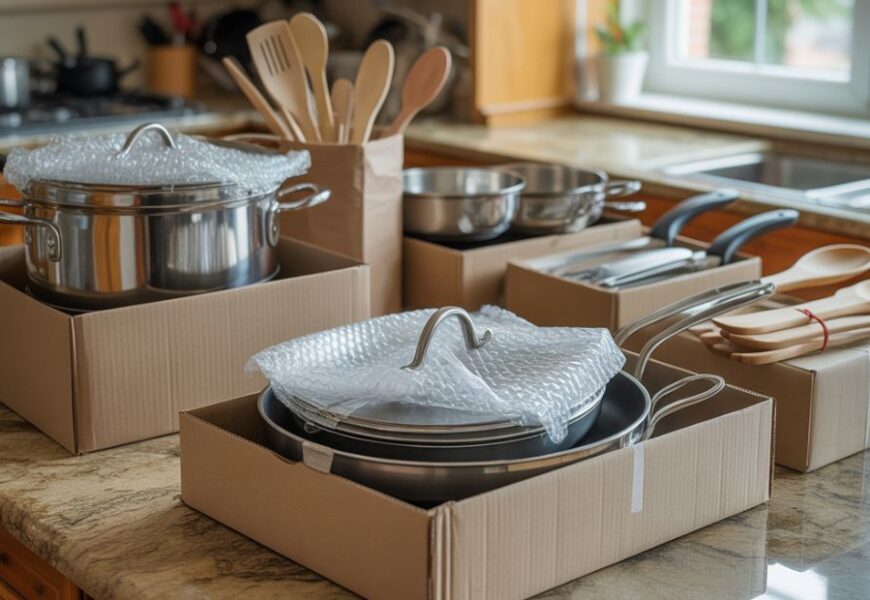
Before you start packing, gather the necessary packing materials. You’ll need packing paper, bubble wrap protection, and soft materials like kitchen towels or sponges to cushion your cookware. Heavy-duty garbage bags can also come in handy for local moves. For fragile pieces like glass lids, make sure you have extra bubble wrap to avoid breakage. If you’re moving cookware long-distance, consider using specialized moving boxes for kitchen items, which are stronger than standard boxes and make it easier to manage how to store packing materials efficiently during the move.
Packing pots and pans requires more than just a box and some tape. You need to think about how to protect each item from bumps and drops during the move. Soft packing materials like towels or dishcloths are essential for filling gaps and providing extra cushioning to keep your kitchenware safe.
Step-by-Step Process on How to Pack Pots and Pans When Moving
Clean and Dry Your Cookware
Before packing, it’s crucial to ensure that all your pots and pans are clean and dry. Cleaning pots and pans before packing helps prevent food residue or moisture from causing stains or odors during the move. If you’re unsure how to pack pots and pans when moving, take the time to thoroughly clean and air dry each piece to avoid issues like rust or mildew. Properly cleaned cookware will also be easier to wrap and protect during transit.
2. Nesting Pots and Pans
One of the best ways to save space and protect your cookware is by nesting cookware for packing. Nesting involves placing smaller pots and pans inside larger ones, which helps to reduce the risk of damage. For example, you can place your smaller saucepans inside larger stockpots. Be sure to use packing paper or bubble wrap protection between the layers of your cookware to prevent scratches and dents.
3. Wrapping Glass Lids and Loose Parts
Packing kitchen lids can be tricky. Glass lids should be wrapped separately in bubble wrap protection or packing paper to prevent them from breaking. For loose parts like handles, knobs, or small pans, wrap them in soft materials such as towels or dishcloths. This will prevent them from shifting around inside the boxes and getting damaged.
4. Fill Gaps with Soft Materials
After you’ve placed your pots and pans inside the box, fill any empty space with soft packing materials like towels, sponges, or kitchen towels. This will prevent the cookware from moving around during transport, minimizing the chances of it getting damaged. Make sure the box is packed tightly enough that nothing shifts, but not so tight that it’s difficult to close.
Packing the Box for Maximum Protection
When packing your pots and pans, start by placing the largest, heaviest items at the bottom of the box, followed by smaller pieces on top. Use packing paper or bubble wrap protection to cushion delicate cookware. If you’re unsure how to pack pots and pans when moving, be sure to seal the box tightly and reinforce the edges with extra tape to prevent any shifting during transport. For local moves, heavy-duty garbage bags can also offer extra protection for lighter items.
Alternative Methods for Packing Pots and Pans
Using Trash Bags for Local Moves
For local move packing materials, you might not need all the fancy packing supplies. Heavy-duty garbage bags can be a great solution for packing non-breakables like pots and pans for short-distance moves. Just wrap each piece in a towel or kitchen cloths before placing it in the bag. For added protection, you can double-bag the cookware or wrap it in an extra layer of bubble wrap protection.
Using Specialty Moving Containers
For long-distance moves, consider using specialty moving containers specifically designed for fragile kitchen items. These containers are stronger and offer better protection than regular boxes, with some even featuring foam inserts to securely hold your cookware in place. Although they can be more expensive, they are a great investment if you’re unsure of how to pack pots and pans when moving and need extra protection for valuable or delicate cookware.
How to Label and Mark Boxes for Easy Unpacking
When packing your moving boxes for kitchen items, always remember to clearly label each box. Use large, bold writing to mark boxes with fragile cookware. This will help movers handle the boxes more carefully. If you have several boxes containing kitchenware, you can also include a brief description of what’s inside (e.g., “Pots and Pans” or “Non-Breakable Items”).
Labeling moving boxes properly will make it easier to unpack and organize your kitchen once you arrive at your new home. It’ll also help you identify if anything’s missing or damaged during the move.
What to Do After the Move: Unpacking and Organizing Pots and Pans
Check for Damage Upon Arrival
Once you’ve arrived at your new home, it’s time to unpack. Unpacking cookware after moving should be done carefully. Inspect each pot and pan for any damage. Even with the best packing tips for pots and pans, things can still go wrong. Check for scratches, dents, or cracks, and make a list of any broken items that need to be replaced.
Store Cookware Properly in Your New Home
Now that you’ve unpacked, it’s time to think about storing your cookware properly in your new kitchen. Use kitchenware organization tools like shelf dividers or hooks to keep everything neat and easily accessible, and explore pantry storage solutions that help maximize space for pots, pans, and lids. Be sure to avoid stacking heavy pots and pans on top of each other, as this can cause scratches and dents over time. If you’re running low on space, consider renting a storage unit from places like JD Mini Storage to store extra kitchen items. Their ground-level storage units offer a great solution for keeping your cookware safe and organized, especially after learning how to pack pots and pans when moving.
Conclusion
How to pack pots and pans when moving requires careful attention to detail to ensure your cookware arrives at your new home in one piece. By using the right packing materials, such as bubble wrap protection, packing paper, and soft cushioning like towels or dishcloths, you can protect your kitchen essentials from damage during transport and make kitchen cabinet organization easier once everything is unpacked.
Remember to nest cookware, wrap glass lids separately, and fill any gaps in boxes to keep everything secure. Whether you’re moving locally or long-distance, following these simple steps will help make your move easier and stress-free, ensuring that your pots and pans are ready to use once you settle into your new kitchen.
FAQs
The kitchen is often the hardest room to pack due to fragile items like dishes, pots, and pans, along with appliances and utensils.
Start packing at least 2-3 weeks before your move to give yourself plenty of time and avoid last-minute stress.
Plates should be packed upright, like records, to minimize pressure and reduce the risk of cracking.
Wrap each dish in packing paper or bubble wrap protection, and pack them tightly with soft materials to prevent shifting.
Both are great, but bubble wrap protection is better for fragile items, while packing paper is excellent for filling gaps and padding.
Yes, paper towels can be used as an alternative to packing paper for cushioning, especially for lightweight items.