Introduction
When considering a home renovation, one of the most common questions homeowners ask is, “Can you install engineered hardwood over tile?” The appeal of engineered hardwood is undeniable—it offers the beauty of wood floors with greater stability and moisture resistance compared to solid hardwood.
However, installing it over tile flooring raises concerns about compatibility and the long-term durability of the floor. The good news is that, in many cases, it is possible to install engineered hardwood over tile, saving time and money on tile removal. This article will guide you through the essential steps and considerations, helping you decide if this flooring option is the right choice for your home renovation project.
What is Engineered Hardwood?
Engineered hardwood is a type of hardwood flooring made up of multiple layers, designed for superior durability and stability. The top layer consists of a veneer of real hardwood, while the underlying layers are crafted from materials like plywood or MDF (medium-density fiberboard). This construction makes engineered wood more stable in environments with fluctuating humidity, unlike solid hardwood, which can expand and contract in response to moisture.
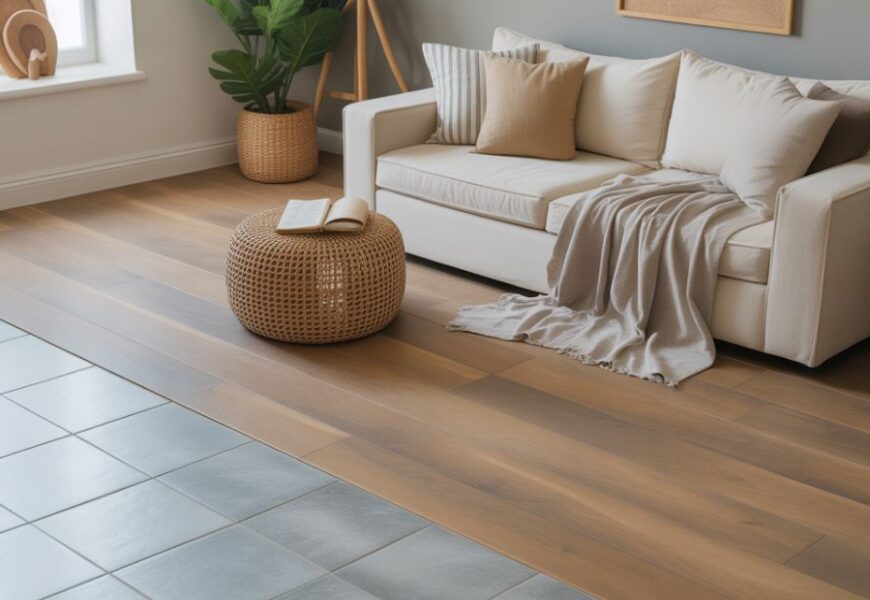
Thanks to its layered design, engineered hardwood is easier to install than traditional hardwood. It can be glued, nailed, or installed as a floating floor, offering greater flexibility. If you’ve ever wondered, “can you install engineered hardwood over tile?”, the answer is yes, making it a convenient and efficient choice for home renovations.
Why Consider Installing Engineered Hardwood Over Tile?
Installing engineered hardwood over tile can be a time and cost-effective way to update your floors. Instead of going through the lengthy and expensive process of tile removal, you can lay your new hardwood floor directly on top of your existing tile flooring. This means you save money on tile removal, disposal fees, and subfloor preparation. Moreover, engineered wood is easier to install, especially when compared to solid hardwood, which requires more labor-intensive procedures.
One of the key reasons for considering this installation method is the moisture resistance of engineered hardwood. While tile floors are typically moisture-proof, areas like bathrooms or kitchens can be prone to moisture that could damage solid hardwood. Engineered wood offers a stable solution, as it’s less likely to warp when exposed to slight moisture fluctuations. Additionally, the time saved by avoiding tile removal allows for quicker home renovations, helping you enjoy your new wood flooring aesthetics sooner.
Can you install engineered hardwood over tile? Yes, as long as the tile is in good condition and the surface is level, this is a great option for a fast, cost-effective flooring update without the hassle of removal.
Can You Install Engineered Hardwood Over Tile?
Yes, you can install engineered hardwood over tile, but certain factors must be considered. First, the condition of your tile floor is crucial. If the tiles are loose, cracked, or uneven, the installation might not be stable or long-lasting. You’ll need to ensure that the tile subfloor is in good shape before proceeding.
Before installation, tile floor condition must be assessed. If tiles are damaged, it’s important to level uneven floors using a leveling compound. Moreover, subfloor stability is key to ensuring a secure installation. If moisture is a concern, especially in basements or bathrooms, it’s essential to use a moisture barrier for hardwood to protect your new floor from potential water damage.
Key Considerations Before Installation
Before installing engineered hardwood, it’s essential to check the condition of the tile floor. Any loose or cracked tiles should be repaired, and uneven floors need to be leveled for a smooth foundation. Moisture is another key factor—if your tile subfloor is in a damp area, moisture can cause engineered hardwood to warp over time, so a moisture barrier is recommended.
Additionally, installing engineered hardwood over tile will increase the floor height, potentially creating transitions at doorways or thresholds. Can you install engineered hardwood over tile? Yes, but make sure to account for these considerations to ensure a successful installation.
Step-by-Step Guide to Installing Engineered Hardwood Over Tile
Installing engineered hardwood over tile follows a relatively straightforward process, but attention to detail is important.
Start by cleaning the tile flooring thoroughly. This step removes dust and debris, which can affect the adhesive or underlayment. Once clean, level uneven floors if necessary by using a leveling compound. After that, you’ll need to lay down a moisture barrier for hardwood if you’re working in a high-moisture area. Choose the correct underlayment options depending on your floor’s condition. If the tiles are in good condition and level, you can proceed with installing the engineered wood.
You can choose from various installation methods: floating floor installation, glue-down hardwood flooring, or nail-down installation method. For floating floors, the planks lock together without being attached to the subfloor, making them easy to replace. For glue-down or nail-down methods, you’ll need to secure the planks to the tile subfloor, depending on your preferences and room usage.
Tools and Materials Needed for Installation
For a successful installation of engineered wood, you’ll need a few essential tools. These include a saw for cutting the planks to fit, a tape measure, and spacers to ensure proper expansion gaps around the perimeter. You’ll also need adhesive for glue-down hardwood flooring, a pneumatic nailer for nail-down installation, and a jigsaw for cutting pieces around obstacles like corners or door frames.
Materials include your engineered hardwood planks, underlayment (which is essential for soundproofing and moisture resistance), and transition strips for finishing the edges. A moisture barrier for hardwood is also necessary, particularly in high-moisture areas like kitchens or basements.
Pros and Cons of Installing Engineered Hardwood Over Tile
One of the major benefits of installing engineered hardwood over tile is the reduced time and cost involved. There’s no need for tile removal, and the installation process is faster compared to starting from scratch with new subflooring. Additionally, engineered hardwood is more durable and stable than solid hardwood in areas with temperature and moisture fluctuations. This makes it a great choice for homes with varying climates.
However, there are some downsides. Wood floor height considerations can cause problems with transitions between rooms, especially if the height difference is too significant. Additionally, moisture can be a concern if the tile subfloor is not properly prepared or if the right moisture barrier for hardwood is not used.
Common Mistakes to Avoid When Installing Engineered Hardwood Over Tile
One common mistake is neglecting to test the tile floor condition before installation. If the tile flooring is cracked or uneven, it could lead to issues down the line. Another mistake is failing to properly install a moisture barrier for hardwood in moisture-prone areas, which can lead to engineered wood warping over time. Always make sure to use leveling compound for uneven floors and consider subfloor moisture testing before beginning the installation process.
Lastly, be mindful of wood floor adhesives. Choosing the wrong adhesive for your engineered hardwood could result in a less secure installation, which may cause the flooring to come loose over time.
How Much Does it Cost to Install Engineered Hardwood Over Tile?
| Cost Category | Price Range | Details |
| Engineered Hardwood (per sq. ft.) | $2 – $10 | Price varies depending on wood quality. |
| Underlayment (per sq. ft.) | $0.50 – $1 | Costs for the underlayment layer. |
| Professional Installation (per sq. ft.) | $3 – $6 | Labor costs for professional installation. |
| DIY Installation | No labor cost | Save on labor costs with DIY installation. |
| Overall Cost Savings | Varies | Installing over tile saves on removal & prep costs. |
Overall, installing hardwood over tile can save you significant money compared to removing tile, preparing a new subfloor, and installing new hardwood.
When Should You Remove the Tile and Start Fresh?
While installing engineered hardwood over tile is often a great option, there are cases when tile removal might be necessary. If the tile floor condition is poor, such as with severely cracked or loose tiles, removal may be the best option. Also, if moisture levels are consistently high in the area, you may need to replace the tile with a more secure, moisture-resistant surface.
If the wood floor height considerations create significant issues with transitions or door clearance, removing the tile and starting fresh may be a more practical solution.
Also, read: Affordable Hardwood Socialbizmagazine Quality Wood Floors
Alternatives to Engineered Hardwood Over Tile
If you’re hesitant about installing engineered hardwood over tile, consider alternatives such as vinyl plank flooring. Vinyl is durable, easy to install, and comes in a variety of wood-look finishes. Another option is laminate flooring, which can also be installed over tile and offers a similar aesthetic to hardwood flooring. Both alternatives are cost-effective and less prone to moisture issues than traditional solid hardwood.
Conclusion
Installing engineered hardwood over tile can be a smart and efficient way to update your floors without the hassle and expense of tile removal. Not only does it save time and money, but it also provides a moisture-resistant solution that’s ideal for areas prone to fluctuations in humidity.
However, to ensure the best results, it’s important to properly assess the condition of the existing tile, address moisture concerns, and plan for any height changes. Can you install engineered hardwood over tile? Yes, and by taking these key considerations into account, you can enjoy a beautiful, durable floor with minimal disruption to your home.
Also, read: Warm Grey Grout: A Versatile Choice for Your Home
FAQs
Yes, you can install engineered hardwood over tile, as long as the tile is in good condition and the surface is level.
Engineered hardwood can be more susceptible to scratches and dents compared to solid hardwood, and it may not be as long-lasting in high-moisture areas.
The best flooring to install over tile includes engineered hardwood, laminate, or vinyl, as these options don’t require tile removal.
You don’t have to remove tile before installing hardwood if it’s in good condition, but it’s essential to ensure the surface is level and clean.
You can cover tile floors with options like engineered hardwood, laminate, vinyl, or carpet, provided the tile surface is level and secure.
Replacing tile with hardwood can cost anywhere from $6 to $12 per square foot, depending on the wood type, labor, and installation method.