Introduction
Refacing your kitchen cabinets can completely transform your space without the cost of a full renovation. If you have face frame cabinets, mastering the art of veneer trimming is essential for a flawless finish. This kitchen cabinet refacing veneer trimming guide for face frame cabinets will help you understand the process step-by-step, making it easier to achieve professional results.
Veneer refacing is a popular choice because it enhances durability while giving your cabinets a fresh, modern look. Whether you’re a DIYer or hiring a pro, knowing how to trim and apply veneer properly ensures your kitchen looks polished and lasts longer. If you’re exploring kitchen makeover ideas, mastering veneer application is a great way to transform your space without a full renovation. Get ready to learn the secrets to perfect cabinet transformation.
Understanding Face Frame Cabinets and Veneer Refacing
Face frame cabinets have a visible frame on the front edges that holds the cabinet box together. This frame creates a strong structure but requires special attention when refacing. Unlike frameless cabinets, the edges in face frame cabinets are more exposed, making veneer trimming a critical step in the process. Proper cabinet hinge solutions are also important to ensure doors align well after refacing. Veneer refacing means applying a thin layer of wood or wood-like material to these frames to refresh their look.
The beauty of veneer refacing is that it is cost-effective and less disruptive. Instead of tearing out cabinets, you give them a new surface, saving money and reducing waste. This method also offers flexibility in design, allowing you to choose from many veneer types and finishes. For kitchen cabinet veneer refacing, understanding the face frame’s anatomy helps you cut and trim the veneer properly, which affects the final look and durability of your cabinets.
Tools and Materials Needed for Veneer Trimming
Before you begin your veneer trimming project, gather the right tools and materials to make the process smooth. Essential tools include a sharp utility knife for cutting veneer sheets cleanly, a veneer trimmer for precision edges, sanding blocks to smooth surfaces, and strong adhesive glue designed specifically for wood veneers. Having edge banding materials and trim pieces on hand will help cover the veneer edges neatly after trimming.
Quality tools and materials directly influence the success of kitchen cabinet refacing veneer trimming. Using subpar glue or dull knives often results in peeling veneer or rough edges. Investing in good sanding paper and a reliable veneer trimmer pays off with a flawless finish. Remember, the goal is to make your cabinets look like they were professionally redone, so the right materials matter.
Step-by-Step Guide to Veneer Trimming for Face Frame Cabinets
Prepare the Cabinet Surface
Start by cleaning and sanding the cabinet face frame thoroughly. Remove all grease, dirt, and old finishes to ensure the veneer sticks properly. Sanding creates a smooth, even surface, which is key for a strong bond. If you skip this step, you might end up with bubbles or peeling veneer later.
After prepping, check for any holes or cracks and fill them with wood filler. A flawless base ensures the veneer lies flat and looks smooth. This preparation phase takes time but is the foundation of a professional veneer refacing job.
Cutting the Veneer to Size
Measuring the cabinet face frame carefully is critical before cutting your veneer. Use a ruler and pencil to mark precise lines on the veneer sheet. Cut slowly with a sharp utility knife or veneer trimmer for clean edges. Cutting too fast or using a dull blade often causes jagged edges or tearing.
When following a kitchen cabinet refacing veneer trimming guide for face frame cabinets, cutting veneer to size can be tricky because veneer is thin and delicate. Take your time and always double-check measurements. A well-cut veneer fits snugly, preventing gaps that can ruin the finished look. Inaccurate cuts waste materials and cause frustration.
Applying Adhesive and Placing Veneer
Choosing the right adhesive matters for long-lasting results. Contact cement or specialized wood glue works best. Apply a thin, even coat on both the cabinet surface and the back of the veneer. Let it dry slightly until tacky, then carefully place the veneer onto the frame.
Press down firmly, starting from one edge to avoid trapping air bubbles. Use a roller or a flat tool to smooth the veneer. Misalignment or wrinkles here are hard to fix once glued, so take your time. This step requires patience but ensures a strong bond and smooth finish.
Trimming Excess Veneer
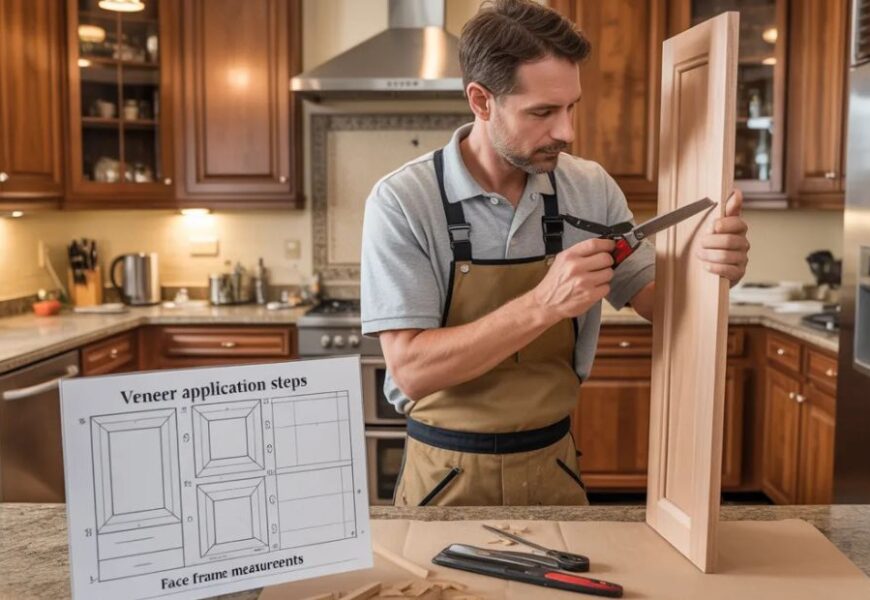
After the veneer is firmly in place, trim any excess material around the edges. Use a sharp veneer trimmer or a fine utility knife. Cut slowly and follow the cabinet’s shape closely. Excess veneer left hanging spoils the neat, professional look.
This step demands accuracy to prevent damage to the veneer or cabinet underneath. A clean trim line highlights the quality of your refacing work. Practice your trimming skills on scrap veneer if possible, to gain confidence.
Sanding and Finishing Edges
Once trimming is done, sanding the edges smooths out rough spots and blends the veneer seamlessly with the cabinet. Use fine-grit sandpaper and light strokes to avoid sanding through the veneer layer. This gentle sanding improves adhesion for any edge banding or trim that follows.
Sealing the edges with a clear coat or varnish protects the veneer from moisture and wear. This finishing touch increases the durability of your cabinets and maintains their fresh appearance for years.
Installing Edge Banding or Trim Pieces
To hide veneer edges and create a polished look, install edge banding or decorative trim pieces. Edge banding comes in various styles and colors, allowing you to match your kitchen’s design. Apply it carefully, pressing firmly and trimming excess for a tight fit.
Edge banding not only improves aesthetics but also protects vulnerable veneer edges from peeling or chipping. Trim pieces add character and can complement cabinet hardware, making your refacing project truly stand out.
Tips for Achieving a Professional Finish
Patience and precision are your best friends when refacing veneer on face frame cabinets, as emphasized in this kitchen cabinet refacing veneer trimming guide for face frame cabinets. Take your time during measuring, cutting, and gluing. Keep your tools sharp and clean, and replace blades when they dull. If you encounter wrinkles or bubbles, gently lift and reposition the veneer before the adhesive sets. Paying attention to these details will ensure a flawless finish that complements your overall kitchen storage solutions.
Remember, a flawless finish depends on attention to detail. Small mistakes can be fixed early if caught, but are hard to correct once dried. Practicing on sample boards before working on actual cabinets builds your skills and confidence.
Maintaining Your Newly Refaced Veneer Cabinets
After investing effort into your kitchen cabinet veneer refacing, proper care extends their life. Clean veneer surfaces gently with mild soap and water, following practical DIY home improvement tips that focus on preservation rather than harsh cleaning. Avoid harsh chemicals or abrasive scrubbers that can damage the finish.
Protect your cabinets from excessive moisture by fixing leaks promptly and using exhaust fans while cooking. Regularly check edges for lifting or damage and repair small issues early to prevent bigger problems. Well-maintained veneer cabinets keep their charm for years, saving you money on future repairs.
Common Mistakes to Avoid When Trimming Veneer on Face Frame Cabinets
Rushing through the trimming process is a frequent error that leads to uneven edges and peeling veneer, which is why following a kitchen cabinet refacing veneer trimming guide for face frame cabinets is essential for clean results. Cutting with dull tools causes tears, and skipping surface preparation results in poor adhesion. Using too much glue can create messy spills and bubbles, while too little glue risks veneer falling off.
Another common mistake is ignoring the importance of sanding edges properly, which weakens the bond and invites damage. Avoid these pitfalls by following step-by-step instructions carefully and taking your time.
Benefits of Proper Veneer Trimming in Kitchen Cabinet Refacing
Precise veneer trimming transforms ordinary cabinets into eye-catching focal points. It enhances the durability and aesthetic appeal of your kitchen, complementing popular modern kitchen color schemes to create a cohesive and stylish space. Properly trimmed veneer reduces wear and tear at edges, keeping cabinets looking new longer.
Moreover, high-quality refacing increases your home’s value. Potential buyers notice well-maintained kitchens and are willing to pay more. A beautifully finished veneer job shows craftsmanship and care, making your kitchen a space you’re proud of.
Conclusion
Giving your kitchen cabinets a fresh new look through veneer refacing can be both rewarding and cost-effective. By carefully following each step in this kitchen cabinet refacing veneer trimming guide for face frame cabinets, you ensure a smooth, durable finish that enhances your kitchen’s style and value.
Paying close attention to preparation, cutting, trimming, and finishing details makes all the difference between a rushed job and a professional-quality result. Whether you choose to tackle the project yourself or seek professional help, understanding the process empowers you to make informed decisions. Your kitchen deserves the best, and with the right approach, your cabinets will shine for years to come.
FAQs
Clean and sand the cabinet surfaces, then apply adhesive and press veneer sheets firmly. Trim edges neatly and seal for durability.
Replace doors and drawer fronts, then apply veneer to cabinet boxes for a fresh look without full replacement.
Refacing replaces doors and covers boxes with veneer, while resurfacing focuses only on finishing existing surfaces
Apply contact cement or wood glue, press the veneer in place, and trim excess once it bonds securely.
Adjust hinges if possible, or use thin molding, filler strips, or edge banding to conceal the gap.
Yes, a flush face frame ensures proper door alignment and gives cabinets a clean, professional finish.